I’ve never liked the hotel analogy for coworking.
I get it. The brand consolidation, the different tiers and pricepoints, the hospitality, the scalability, the ease of discovery and use. But the hotel analogy falls apart when you scratch below the surface.
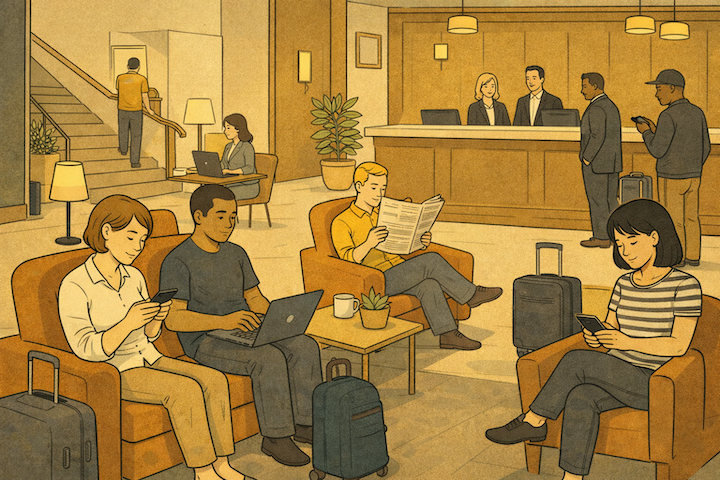
In a hotel, there is no expectation of connection, or even saying hello to the other guests. Everyone is doing their own thing and will be gone tomorrow, whereas in a great coworking space, members ideally stay for years and form all kinds of connections and friendships.
When I’m in a hotel, it’s the norm to be greeted somewhat formally and have nice hospitality touches. But in a coworking space, those greetings and touches very quickly need to move beyond “Good morning” or “Have a nice day” or they run the risk of actually pushing people away.
If a coworking member sees the same people every day for months or years and the only conversation is “Good morning” or “Have a nice day,” you have a big problem. This scenario oozes transactional, which is the exact opposite of what you want in a coworking space.
In coworking, each touchpoint is an opportunity to deepen a connection and forge a real—even if lightweight—friendship. To do otherwise is a huge missed opportunity.
Everyday hospitality
Hotel hospitality is different from what I call everyday hospitality.
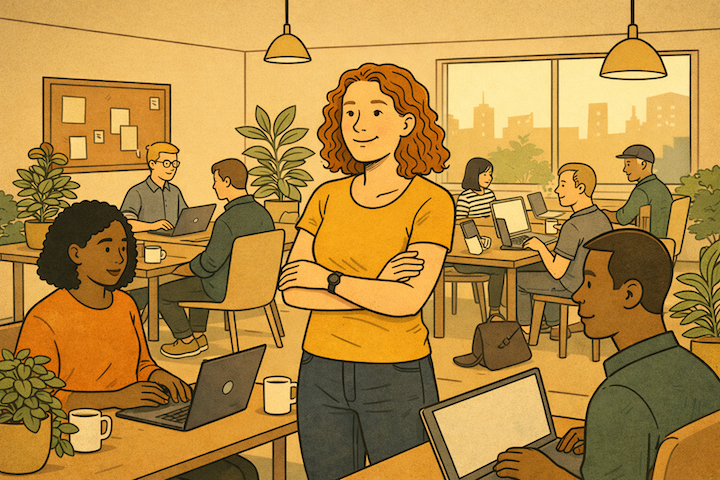
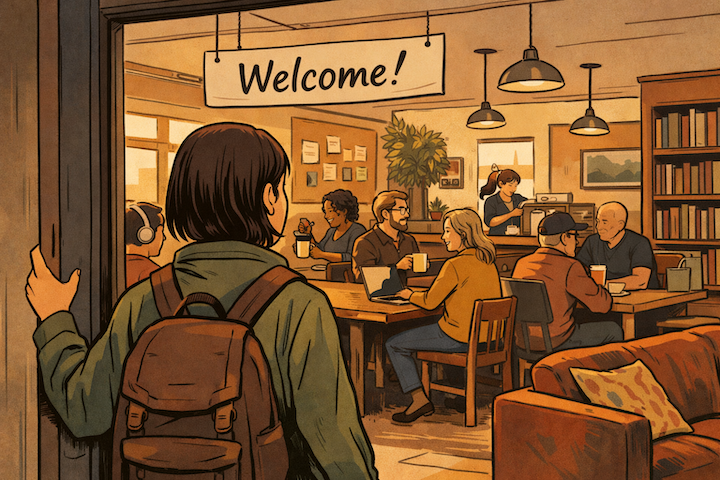
Hotel hospitality is short-lived and focused on meeting small needs as they arise. Everyday hospitality is about creating a sense of connection and belonging through opportunities to meet people, talk about what you’re working on, collaborate, share resources and ideas, lead and participate in discussions, and meet small and large needs of the community and members.
The flex world is looking to hotels in a big way right now, with everything from the in-space experience to the software. And I understand why. It’s far easier to scale hotel hospitality than it is to scale community building. Hotel hospitality requires SOPs and polite, knowledgeable humans.
Everyday hospitality, which is part of creating a great coworking community, however, requires deeper human interaction, an authenticity between the community builders and the members, and a genuine intention to create connection among members.
Nice-but-boring spaces
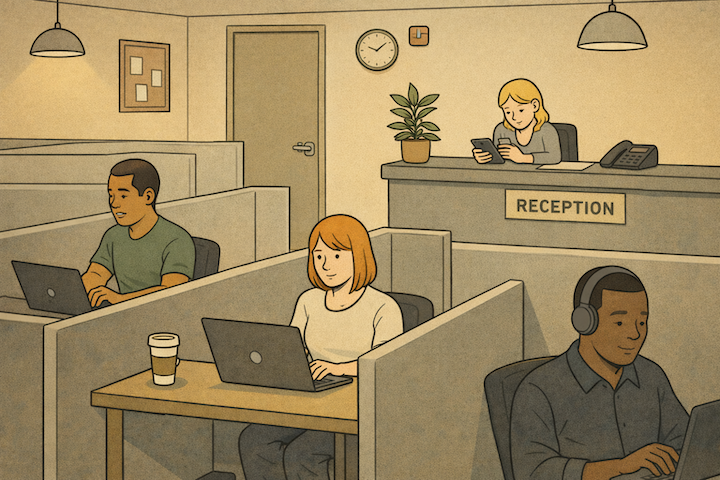
When community building is relegated solely to SOPs implemented across dozens (or more) of spaces, you run the risk of having a nice-but-boring space.
As Angel Kwiatkowski from Cohere Coworking brilliantly put it, “If your ‘coworking’ space could swap every member out tomorrow and nothing about the culture would change, congrats. You are running an executive center with a bigger vibe budget.”
This is in no way a takedown of hotel hospitality. Nice hotel hospitality is obviously exactly what you want from a stay at a hotel while on the road. It is not, however, the best model for coworking.
We should pull from hotel hospitality things that can enhance the experience of members, but let’s not think we can replace the hard work of building connections and a sense of belonging in a space with transactional, short-lived hospitality that never goes below the surface.
If you want members to stick around for years, don’t treat them like short-stay guests.
🧪 Things are heating up in the Coworking Creators Lab. Check out our event calendar and, if you’re a community-focused space, come join the movement.