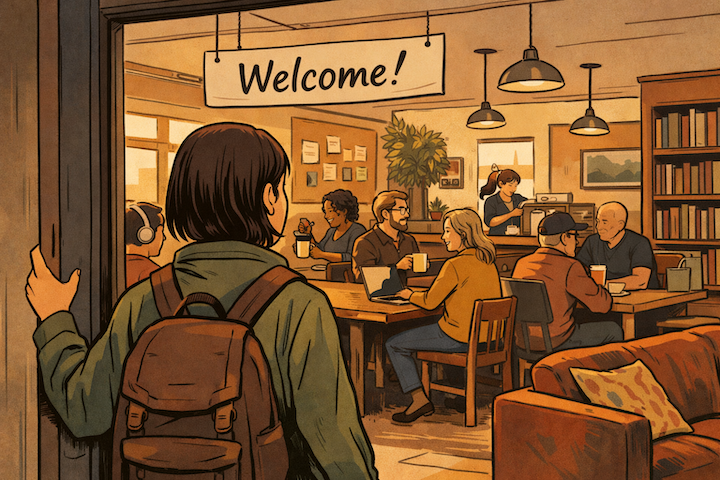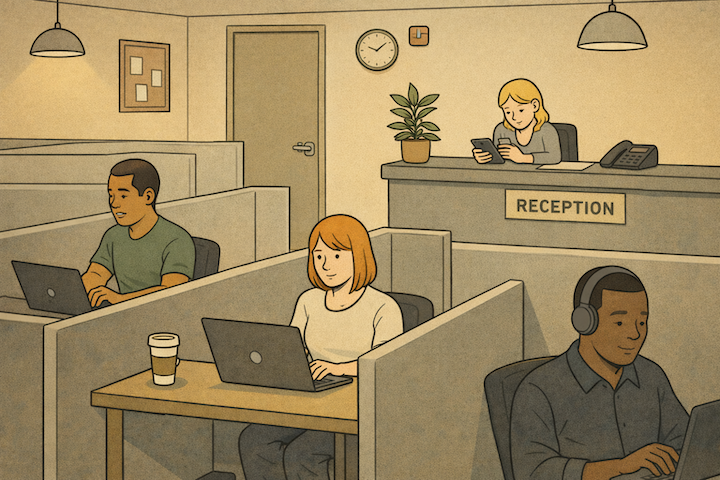
You know that the team sets the vibe in a coworking space, right? And that members are watching the team to see how to be in the space and community, right?
So if someone is putting off receptionist vibes, the assumption is that they’re a receptionist and they’ll be treated as such. Which is the opposite of what you want if you’re trying to build a great coworking community.
If you’re not introducing people and setting a norm that members know and support each other, it is not going to happen. And, even worse, by not creating a norm of connection, you’re creating a norm of disconnection.
You are part of the community you’re trying to build, and everyone is looking to you to see what the community is all about. If you’re keeping to yourself, not spending time in the common areas and encouraging others to do the same, you’ll end up with a quiet and unengaged space where everyone keeps to themselves.
And a quiet and unengaged space where everyone keeps to themselves builds on itself and soon you have a space with zero vibe or energy full of strangers milling around.
Which is just the worst.
A few of your members may lean toward a superficial and transactional relationship because not everyone wants to engage and connect. But the majority of your members are likely people who want to be known, know each other, and have opportunities throughout the week to connect and deepen relationships.
That’s the difference between coworking and flex. The “co” in coworking implies that there is a togetherness; that your members are not simply working in parallel; that there’s a shared sense of space and community.
Flex is gonna flex, but coworking is a massively better experience for members and for you. Because, remember, you are part of the community you’re working to build!
And if you’re disconnected, unengaged and uninspired, members can feel that.
🧪 Do you run a community-focused coworking space? We’re saving you a seat in the Coworking Creators Lab.