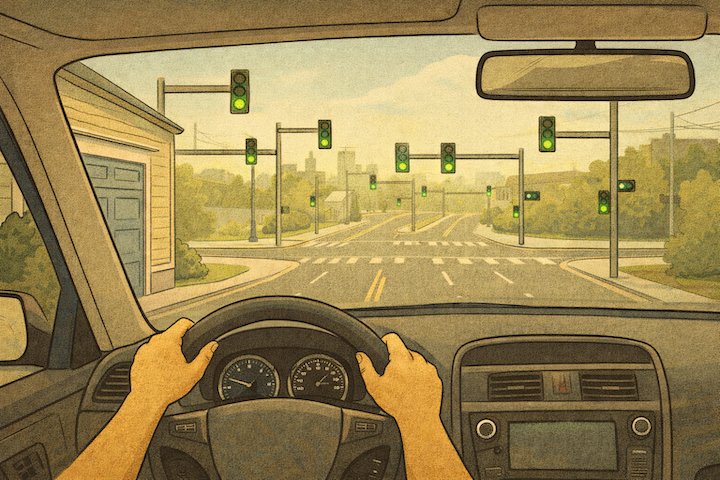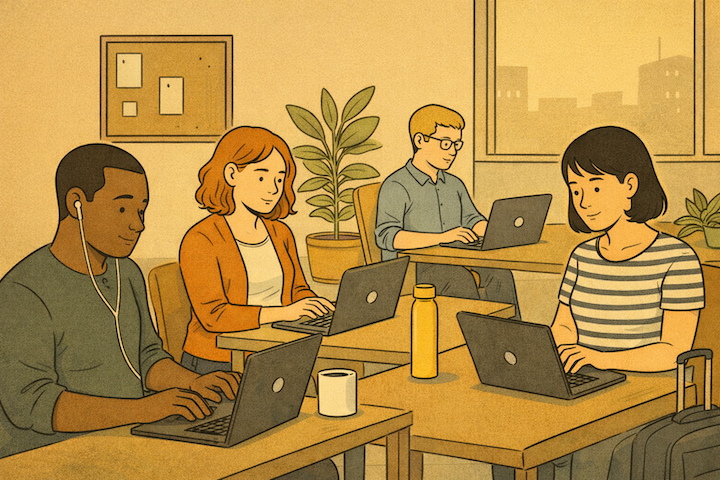
We all know the feeling: You’re surrounded by people, wishing for some kind of connection, and feeling entirely alone. Whether a coffee shop, public transit, a dancefloor, or a workspace, it feels terrible.
If you’re content in a moment of aloneness, these things can be positive—little pockets of solitude in a bustling world. But wanting to feel part of something and feeling nothing but loneliness is the worst.
Because loneliness is not simply being alone. Loneliness is the gap between the relationships you want and the relationships you actually have. As the authors of the “Loneliness Matters” research found:
“Loneliness is synonymous with perceived social isolation, not with objective social isolation. People can live relatively solitary lives and not feel lonely, and conversely, they can live an ostensibly rich social life and feel lonely nevertheless. Loneliness is defined as a distressing feeling that accompanies the perception that one’s social needs are not being met by the quantity or especially the quality of one’s social relationships.”
Proximity without connection
So proximity without connection can be either neutral, negative, or positive.
In a study on workplace proximity, researchers found that people learn faster when they sit near coworkers, especially early-career workers who benefit from informal feedback and observation.
When we work near capable people, we learn by osmosis. They call this performance spillover as people working close to high performers increase their own productivity, through both observation and behavioral modeling.
In a great coworking space, this boost can be attributed to the energy of the space and community, exposure to ideas, learning through observation, and a sense of comfort and belonging.
So proximity, like what you have in a shared workspace, creates possibility and potential. But proximity alone is not enough.
Most of us see people regularly who we never really interact with, such as on commutes, at our favorite coffee shop, and in our extended neighborhood. No big deal. There’s not really a call for more than a smile, nod, or wave.
Disconnection is contagious
But when this proximity minus connection shows up in a coworking space, it can be devastating to a community. And it tends to be contagious. If there are enough people not engaging and the norm of the space becomes physical proximity without relational proximity, you have a problem.
You recognize their faces, you know where they sit, you see them every day, but you don’t know their name or anything else about them.
Research has shown (and Covid taught us) that weak ties play an important role in social ecosystems, but they don’t replace meaningful relationships and they can create a sense of loneliness. Interestingly enough, loneliness is also contagious. Studies have found that loneliness can spread through social networks, clustering among disconnected individuals.
The hidden cost of proximity without community
The hidden cost of proximity without connection and community in a coworking space is very real. You end up with a lack of energy, low engagement with your members, minimal (or nonexistent) collaboration, and the overall feeling of a transactional environment. And anyone can tell the difference between being in a vibrant space and an unactivated office rental facility.
We know that occupancy is not activation. And that in spaces that optimize for filled desks instead of connected humans, the potential for real community and impact gets sidelined, which is bad for people and bad for business. How long can a flat workspace compete in a quickly growing environment that’s leaning more and more toward purpose, community, and connection?
A norm of connection
Connection emerges from intentional design of your space and community. It includes introductions, shared rituals, active community building, relevant events, and a norm of connection.
It requires an invitation to belong, opportunities to interact, support in those interactions, and the social safety to interact in the ways that work for different people. The biggest difference between boring space rental and activated coworking communities is that boring workspaces prioritize proximity, desks, wifi, and quiet. While coworking prioritizes connection, collaboration, belonging, and mutual support.
So dig deeper in your community building to create real connection instead of just proximity. Because the future of work is not about putting people near each other, it’s about helping people find each other.
🧪 Things are bubbling in the Coworking Creators Lab. If you’re a community-focused space, come see what the buzz is all about.