Is coworking a third place?
Sometimes.
Third places are physical spaces where people gather, relax, and socialize outside of their homes (the “first place”) and workplaces (the “second place”). They all have the following traits laid out by sociologist Ray Oldenburg, who coined the term “third places” in his 1989 book The Great Good Place.
The Four Traits of Third Places
- Neutral ground: You can come and go as you please without obligation or pressure to buy something.
- Inclusivity: There are no rigid membership fees or social hierarchies; everyone is welcome.
- Conversation focus: The primary activity is talking, socializing, and building a sense of community.
- Regulars: You frequently run into the same familiar faces, which fosters a sense of belonging.
So let’s break it down.
According to Oldenburg’s description, most coworking spaces are not third places because while they do have regulars and the freedom to come and go as you please, they have membership fees and the primary activity is not talking and socializing.
They are more like second places.
But, socializing and building a sense of community is central to a great coworking space. And great coworking spaces also offer ways for people to participate in the community without being a member.
Expanding the Description of a Third Place
If we look back, third places have typically been places of commerce (pubs, restaurants, barber shops), which pushes us to expand the description of a third place.
So I would argue that some coworking spaces are third places and some definitely are not.
Looking at the spectrum of shared workspaces, on one end we have transactional, executive suite models that have desks and offices for rent, and may or may not have a human on-site.
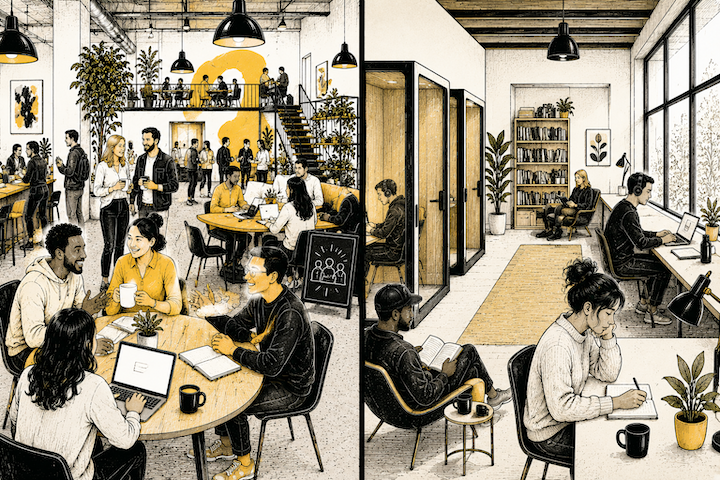
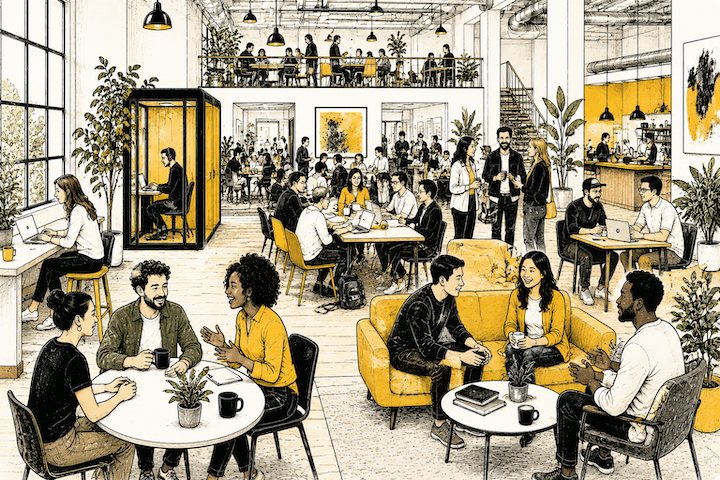
On the far other side of the spectrum, we have spaces that are hyper community-focused to the point of being less of a place where people just work and more of a place where people do lots of things, including work, meeting up, clubs, creating, conversing, crafts, having coffee, making music, etc.
It’s not hard to see that the second example is a third place.
Spaces In-Between
But what about all the spaces between these two examples? I imagine many of you have aspects of being a third place in your space. And I encourage you to find ways to strengthen your positioning as a third place for two reasons.
- As coworking continues to grow, it’s getting harder and harder for spaces and brands to compete on having trendy design and nice chairs. Everyone has those and anyone with deeper pockets than you can out-design you. A nice space is no longer a differentiator.
- Young people moving into coworking don’t want or need desks and wifi. They want to meet cool people, do interesting things, and spend their time in spaces with a great vibe, which comes when you have a lively, activated space and community.
The Vibe is Central
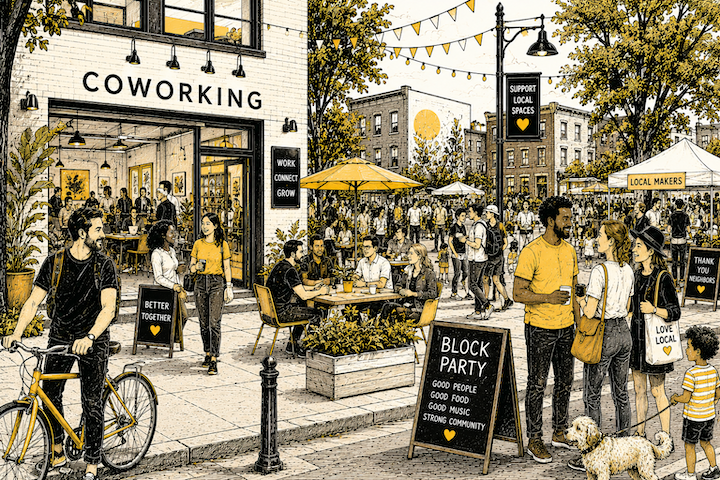
If you want to truly make an impact on your neighborhood, town, and region, the more you can position yourself as a third place, the better off you’ll be as you attract people who are looking for connection, engagement, and opportunities to collaborate.
Having a space of connection and belonging is a far more powerful differentiator than having nice sofas, barista machines, and chandeliers.
There will always be a segment of the industry focused on the workspace transaction of money for desks. But I’m betting on a future where people won’t settle for transactional relationships in the spaces where they spend the majority of their days.
So find ways to become more of a third place and watch your community grow and thrive.
🧪 Do you run a community-focused space? Come see what we’re building in the Coworking Creators Lab.