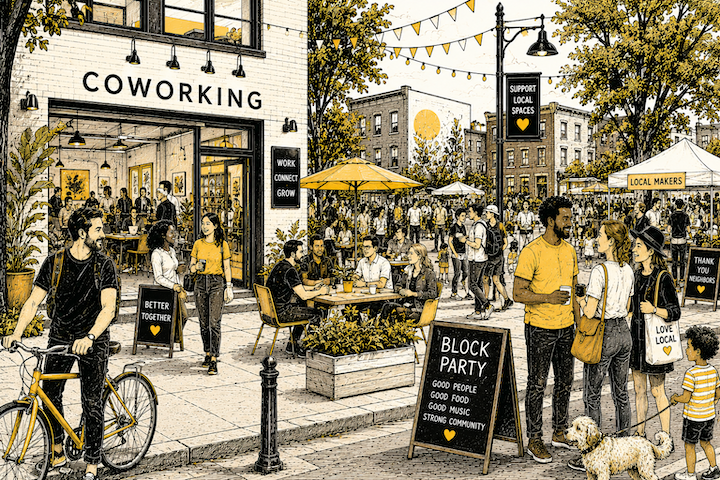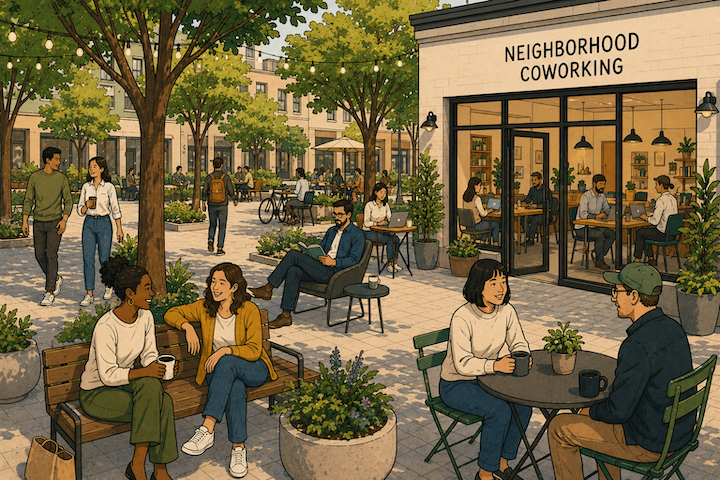
Do you know that you’re placemaking as you build your coworking space and community?
Described as the practice of designing cities for people, connection, and walkability, rather than cars, placemaking was pioneered by Jane Jacobs and William H. Whyte in the 1960s.
But creating community-focused places is as old as humanity and it reaches into every aspect of our lives.
Which brings us to coworking.
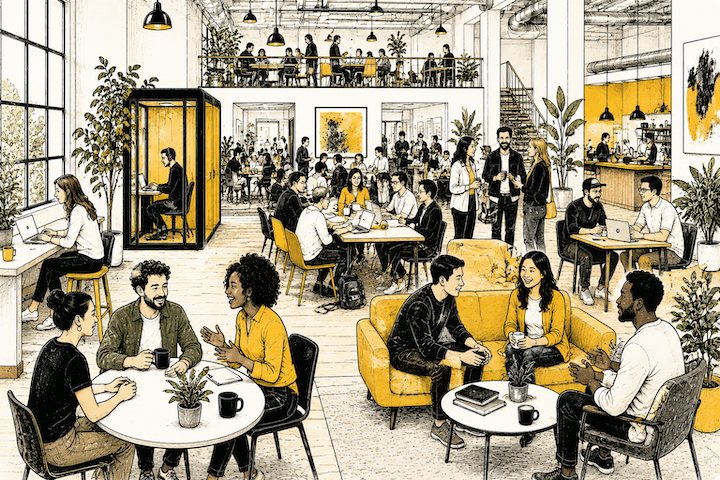
Coworking is relatively new, but the practice of building a great coworking space and community is rooted in our humanness. And the best coworking communities are built, not around the space, but around the members.
Placemaking has 11 principles and you can see there’s a lot of overlap between making places that contribute to thriving cities, and making coworking spaces that contribute to thriving communities.
Here are the 11 Placemaking Principles and my thoughts on how they relate to coworking:
1. The community is the expert.
The people who use the space every day know what works, what doesn’t, and what’s missing. Your job isn’t to have all the answers. It’s to listen, notice patterns, and build with your community, not for them.
2. Create a place, not a design.
Placemaking isn’t about making something look good on paper. It’s about how a space feels, how people move through it, and whether it invites connection and belonging.
3. You can’t do it alone.
Placemaking is a team sport. The magic happens when you bring in different voices, including members, neighbors, and partners, and let them shape the space and community alongside you.
4. You can see a lot just by observing.
Before you change anything in your space or community, pay attention. Where do people naturally gather? Where do they hesitate? The space is already telling you what it needs if you slow down enough to notice.
5. Have a vision.
You don’t need a rigid master plan, but you do need a clear sense of what you’re trying to create. A strong vision gives direction while still leaving room for the community to co-create.
6. Start with the petunias.
You don’t have to do a full redesign to make meaningful changes in your space. Make small, thoughtful changes, see how people respond, and build from there. Momentum beats perfection every time and your members will show you what they want.
7. Triangulate.
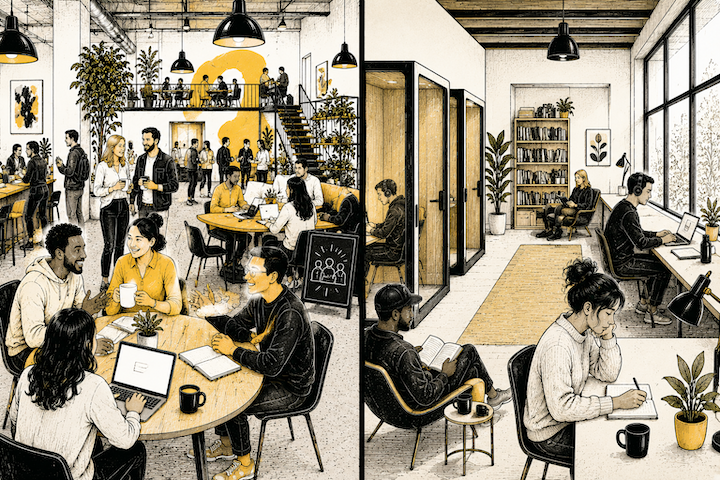
Great spaces give people multiple reasons to engage. When you layer elements like seating, coffee, a puzzle, a piece of art, a conversation starting prompt, or something interesting to look at, you create natural opportunities for interaction.
8. They always say, “It can’t be done.”
If it hasn’t been tried, someone will say it won’t work. Placemaking often means gently pushing past that resistance and proving what’s possible through action. Coworking was built on ignoring the naysayers and creating spaces of real connection.
9. Form supports function.
Design should follow how people actually use the space, not how you think they should use it. When form supports real behavior, everything feels more intuitive and alive.
10. Money is not the issue.
More budget doesn’t automatically create better places. In fact, brands that rely heavily on the spaces themselves and downplay the importance of activating those spaces are getting left behind. Creativity, intention, and community input go a lot further than expensive furniture or big buildouts.
11. You are never finished.
Great places are always evolving. As your community grows and changes, the space should too. Placemaking is an ongoing conversation, not a one-time project. Just like coworking.
💡 Want more community-focused coworking insights? Subscribe to my weekly letter.